

Report: Kiran Zehri
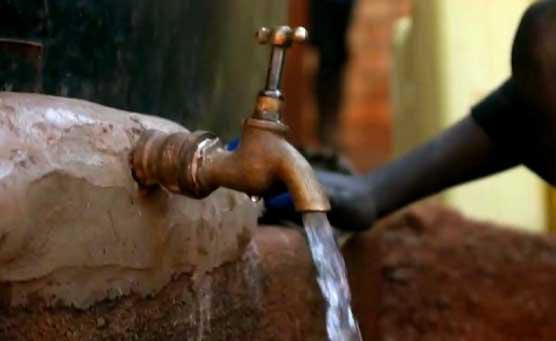
Quetta, the capital of Balochistan province in Pakistan, renowned for its beautiful mountainous landscapes and historical heritage, is currently facing a severe shortage of clean drinking water.
This issue has not only become a challenge for the daily lives of Quetta’s citizens but has also led to various health problems.
Concerns regarding the shortage and contamination of clean water have prompted experts, governmental bodies, and the public to raise their voices for a solution.
The residents of Quetta are currently grappling with severe water scarcity and contamination.
In several parts of the city where the supply of clean water is limited or inadequate, the residents are facing significant hardships.
According to some local populations, they do not have access to clean drinking water and are forced to use contaminated water.
In many areas, the water supply is available only for a few hours, making it difficult to meet daily needs.
Additionally, due to water contamination, citizens are suffering from various diseases, especially dysentery, cholera, and other waterborne illnesses.
One resident, Muhammad Usman, said, “We often go without water for several days, and when water finally comes, it is so dirty that we can’t drink it.
This is affecting our health.”
Experts say that the shortage of clean drinking water in Quetta has become a serious problem.
According to experts, the primary causes of water contamination and scarcity include a lack of natural resources, increasing population, and malfunctioning water supply systems.
An environmental expert shared, “Most of Balochistan’s population is deprived of natural water sources.
Many areas here are dry and mountainous, facing severe water shortages. Moreover, water contamination is also a significant problem, especially when water reservoirs are not properly treated.”
Experts also warn that if immediate action is not taken, more severe health issues could arise in the coming years.
Diseases caused by contaminated water, such as cholera, dysentery, and diarrhea, could increase, leading to a public health crisis in the region.
Contaminated water has caused the spread of various diseases in Quetta. A shortage of clean water and its contamination has resulted in the spread of cholera, dysentery, diarrhea, and other waterborne diseases among the residents.
Additionally, using dirty water has led to skin diseases and other infections.
A local doctor stated, “The number of patients suffering from waterborne diseases in our hospitals is increasing.
Children and elderly people are particularly vulnerable to these diseases.”
These diseases are not only affecting individuals’ health but are also putting pressure on the local healthcare system.
As the number of patients in hospitals and healthcare centers increases, resources are running low, making it difficult to provide adequate treatment and other services.
The Balochistan government and local administration are taking various measures to address this issue.
Several projects have been launched to improve the water supply system, install new water treatment plants, and clean water reservoirs.
The Balochistan government recently launched a project to install water treatment plants in various areas to purify water and make it safe for drinking.
Furthermore, the government has planned the construction of several new water reservoirs to address water scarcity and improve water supply to citizens.
In addition, the government has started a public awareness campaign to educate people about water conservation and the prevention of water contamination.
Experts say that through this campaign, it is crucial to inform people about the importance of clean water and how to avoid contamination.
The clean drinking water issue in Quetta is a complex and serious problem that is affecting the health and daily life of citizens.
Public opinion, expert concerns, and governmental efforts suggest that immediate and effective action is needed to address this problem.
If the government and the public collaborate and take practical steps to solve this issue, the problem can be resolved, and citizens can be provided with clean water.
It is urgent that all relevant institutions and government levels make continuous efforts to ensure the provision of clean drinking water in Quetta to resolve this crisis.
