

Report: Murtaza Zeb Zehri
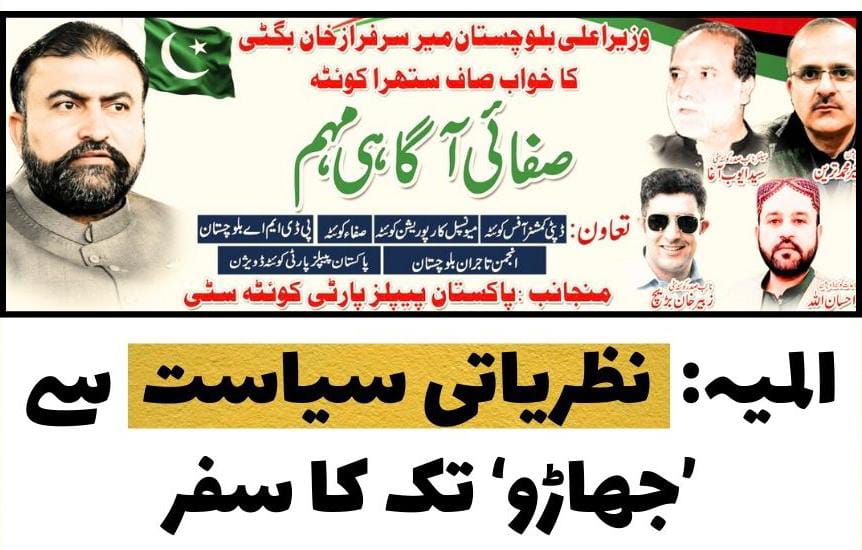
The Pakistan Peoples Party, which once emerged as the voice of the deprived sections of the country with the slogan of “bread, cloth and house”, is now seen leading a cleanliness drive on the streets of the same city.
According to critics, this action reflects the party’s changing priorities.
This reaction actually came after the news that a rally was taken out from Mizan Chowk on Saturday under the leadership of Pakistan Peoples Party Quetta Division President Sardar Khair Muhammad Tareen and Safa Quetta Area Manager Syed Atiq Agha as part of a “cleanliness awareness campaign”.
According to the official statement, the rally passed through Liaquat Bazar, Jinnah Road, Manan Chowk and Kandahari Bazar before ending again at Liaquat Bazar.
The speakers appealed to the citizens and traders to collect garbage at designated places and support the administration in keeping the city clean.
The Chief Minister of Balochistan’s vision of a “clean Quetta” was also mentioned on the occasion.
However, Quetta is currently facing problems such as human rights complaints, unemployment, corruption, drugs and unrest.
In such circumstances, the presence and pictures of political leadership in the name of a cleanliness campaign at Mezan Chowk have become a topic of discussion on social media.
Some citizens say that the city definitely needs cleanliness, but more important are fundamental issues such as justice, employment and security.
According to analysts, the main role of political parties is to make policies and enact legislation to solve public problems.
In their opinion, if political activities are limited to symbolic measures, the impression is created that the real problems have faded into the background.
Youth in Balochistan complain about the lack of employment and educational opportunities.
About 2.4 million children are out of school in this province, facing problems such as severe water shortage and climate change.
17 districts of the province are forced to live a difficult life below the poverty line.
The founding leader of the People’s Party, Zulfikar Ali Bhutto, had in the past talked about giving a political voice to the deprived sections.
Critics say that the current activities are being seen in this context and questions are being raised whether the party is sticking to its ideological narrative or not.
On the other hand, the government’s position is that the cleanliness drive is not a political show-off but an attempt to highlight a sense of civic responsibility.
According to officials, Safa Quetta is improving the cleanliness system in the city with the cooperation of the district administration and business organizations, and the participation of public representatives is a means of raising awareness.
The focus of the debate now is whether progress will be made with the same seriousness on other long-standing issues of Quetta and Balochistan along with the cleanliness drive, or will the political narrative continue to revolve around symbolic activities.
