

By samiullah khan
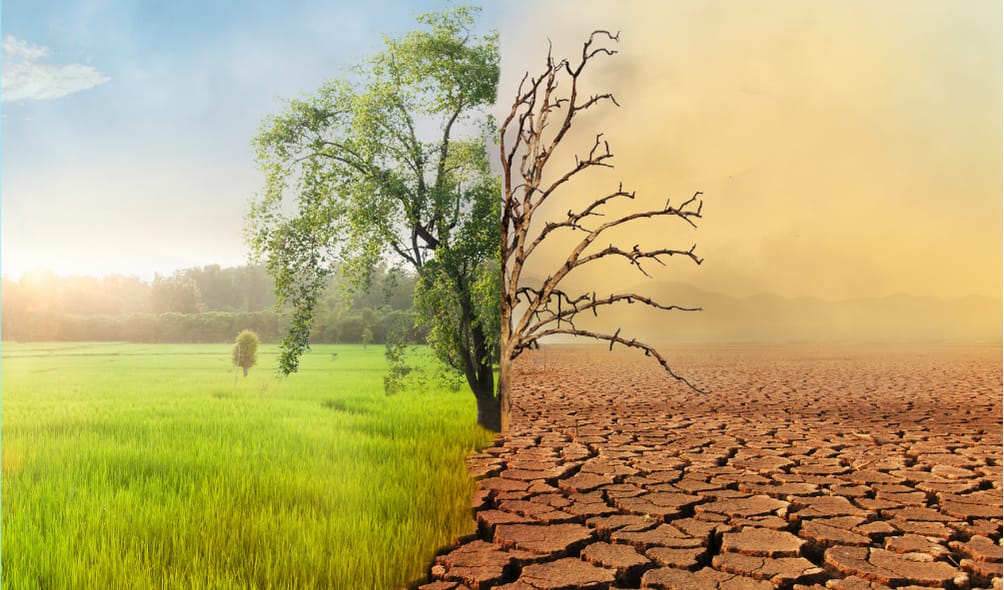
The largest province in Pakistan, Balochistan, occupies more than 44% of the territory’s surface yet has the lowest population density, with only 42.9 persons per square kilometer (2023 census). It is constantly at risk of drought because to its dry deltas, Rocky Mountains, and arid plains. Millions of people rely solely on seasonal rains and a few dams for their water needs, putting the province always in danger of running out.
Quetta, the province capital, is the best place to see this. The city uses about 60–65 million gallons of water every day, but only 30–35 million gallons—nearly half of the demand—are supplied by WASA, the official water supplier. Millions of gallons of water are taken out of underneath supplies and sold by unofficial private tankers. This uncontrolled extraction is creating a ticking environmental, economic, and social time bomb.
➢ Environmental Consequences
The terrain of Quetta is clearly changing as a result of excessive groundwater drilling. When subterranean reservoirs collapse, sinkholes and land subsidence occur. Farm vegetation withers, meadows lose the grass that supports cattle, and wells dry up. With potentially irreversible consequences, these disturbances harm ecosystems and endanger plant and animal life.
➢ Economic Consequences
It takes expensive equipment and large machinery to access groundwater at such depths, which is frequently out of reach for regular people. While impoverished populations struggle, wealthier households have access to enough water. The local economy becomes unstable and inequality increases when resources are diverted to costly extraction.
➢ Social and Health Consequences
Future generations’ access to clean water is threatened by uncontrolled groundwater extraction. Conflicts between neighborhoods, farmers, and communities are triggered by scarcity. Public health is also at risk due to limited access to clean water. Water stress has the potential to worsen into long-term health problems and social unrest if nothing is done.
Risk: At peak
Experts caution that Quetta may see significant water shortages within the next ten years if the current trend continues. Every dry season turns into a crisis in the absence of new dams, reservoirs, or sustainable water management strategies. Over the period of past 10 years estimated rain showered in Quetta is around 260mm to 340mm per year. How long can Quetta continue to rely on this unsustainable system before its resources run out? It is necessary to take immediate action through sustainable urban design, regulated water management, and infrastructural development. Millions of people’s lives and the city’s environment depend on it.
Past Efforts and the need for practical solution
Numerous attempts have been made throughout the years to raise groundwater levels, but none have had noteworthy outcomes. Some struggle that even while the harm may already be irreversible, locals can still find workable, reasonably priced alternatives.
Recharge Wells: A Sustainable Solution
Building recharge wells to store and direct water back into the ground is one viable solution. These wells employ a two-pronged strategy to collect both rainwater and greywater (from bathrooms and kitchens):
1. Direct Approach: To stop runoff or evaporation, rainwater is collected and stored in special wells.
2. Indirect Method: This method safely replenishes subterranean reserves by treating greywater with grease and sand filters before directing it into wells.
By reducing reliance on over-extraction and establishing a self-sustaining water cycle, this technology enables communities to take back control of their water supply.
Structure and Size of Recharge Wells
The amount of water to be channeled determines the drilling of recharge wells.
* Rainwater: Gathered from rooftops, it passes through ducts that filter plastics and grains before going into the well.
* Greywater: Before going into the well, kitchen and bathroom water first goes through a grease filter to get rid of oils and soaps, and then it goes through a sand filter to get rid of small contaminants.
Dimensions of the Well:
* Household wells: 5,000–20,000 gallons, 1-1.5 meters in diameter, 4-6 meters in depth.
* Community/institutional wells: 20,000–50,000 liters in capacity, 2–3 meters in diameter, and 7–12 meters deep.
Hydrogeologists and water authorities determine the spacing between wells based on subsurface characteristics, recharge rate, and soil type. Rainwater wells should be spaced 15–30 meters apart. Community wells are spaced 30 to 70 meters apart.
Wells that are properly designed enhance groundwater replenishment while avoiding well interference.
A Sustainable Model for Quetta (Community Grey-Water Recharge Wells)
Given Quetta’s rapidly depleting groundwater resources, the planned introduction of community-based recharge wells offers a practical and sustainable solution for urban water management. Instead of allowing household grey water to go to waste, a structured system of recharge wells can be integrated into residential, religious, educational, and commercial spaces to enhance groundwater replenishment.
In fully inhabited housing schemes, particularly the approximately 31 registered residential societies in Quetta, it is proposed that community recharge wells be constructed to serve clusters of four to five houses. The grey water generated from daily domestic use—such as washing, bathing, and cleaning—can be safely channelized into these wells, thereby contributing to natural groundwater recharge rather than being lost to surface drainage systems.
Similarly, Quetta’s extensive network of over 1,100 mosques presents a significant opportunity for water conservation and recharge. These religious institutions collectively consume millions of liters of water daily for ablution and cleaning purposes. Installing dedicated recharge wells within mosque premises would enable the efficient reuse of this water, allowing it to percolate back into the aquifer.
Educational institutions, including schools, colleges, and universities, should also be incorporated into this recharge strategy. These facilities utilize substantial amounts of water on a daily basis, and by diverting used water into purpose-built recharge wells, they can play a vital role in sustaining local groundwater levels.
At the neighborhood level, community wells can be strategically placed in streets and lanes to serve clusters of five to eight households. This decentralized approach ensures that recharge efforts are evenly distributed across urban areas, particularly in densely populated localities.
In the case of apartment complexes and flat-based housing, a slightly different model is required. Here, one recharge well should be designed to accommodate the grey water from 10 to 20 flats, ensuring that high-density residential structures are also integrated into the broader water conservation framework.
Collectively, this multi-tiered system of household, community, institutional, and religious recharge wells represents a scalable and environmentally responsible approach to mitigating Quetta’s water crisis while promoting sustainable urban living.
Furthermore, huge underground reservoirs are proposed to be constructed along major drain flowing in the middle of Quetta city known as Habib Naala which length extends from 12 to 15 km. the large the number of reservoirs, the huge is the amount of water stored for recharging of earth.
How Much Water Can Be Saved?
➢ As an individual:
An individual in Quetta consumes approximately 80–90 liters of water per day. For a family of four:
* Daily: 4 × 85 = 340 liters
* Monthly: 340 × 30 = 10,200 liters
* Yearly: 10,200 × 12 = 122,400 liters
Using a 1,000 sq. ft. roof area and 260 mm of rainfall across 9 rainy days per year:
* Volume per day: 92.9 m² × 0.260 m = 20.1 m³ = 24,154 liters
* Annual rainwater collection: 24.154 × 9 = 217,386 liters
Thus 4 a family of four can save water annually: 339786 liters.
➢ As total population:
While talking about the savage of grey water by the residence of Quetta city
Total residents of Quetta city: 1.5 million
Consumption of water per person per day: 85 liters per day (Mean value)
Total savage is 127.50-million-liter water (33.7 million gallons)
➢ As a community:
Let us assume a family of 4 members living on 1000 s. ft. Area can recharge the earth with following capacity of water:
No. of families
(Each of 4 members)
Water saved per year in liters
Water saved per year in gallons
Water saved per day in gallons
10000
339,7860,000
898.01 million gallons
3 million gallons
20000
67,95.720,000
1,795.35 million gallons
5 million gallons
30000
10,193,580,000
2,693.06 million gallons
8 million gallons
➢ Water saved in Masjids:
* Persons taking ablution per time: 100 (Mean value)
* Number of masjids: 1,100 (masjids of Quetta)
* Water per person: 2 liters. (Capacity of Wazu vessel)
* Times per day: 5
Daily water consumption: 100 × 1,100 × 2 × 5 = 1,100,000 liters (0.29 million gallons)
Yearly: 1,100,000 × 365 = 401,500,000 liters (106.07 million gallons).
The above described calculations are meant to classify our society into segments that could be ease to commence segment-wise leading to achievement of a prime goal of recharging earth.
Key Locations for Wells
Recharge wells are also effective when installed in masjids, schools, colleges, universities, and government offices.
Conclusion: Wells Are the Key
Recharge wells represent the most practical, cost-effective solution to replenish Quetta’s groundwater for future generations. By combining rainwater harvesting and greywater treatment, the city can reduce its dependency on over-extraction, restore the environment, and ensure equitable access to water for all residents.
Saving water today means saving life tomorrow.
